

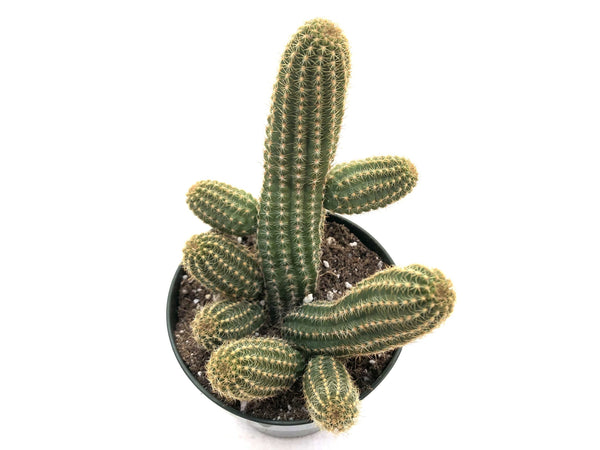
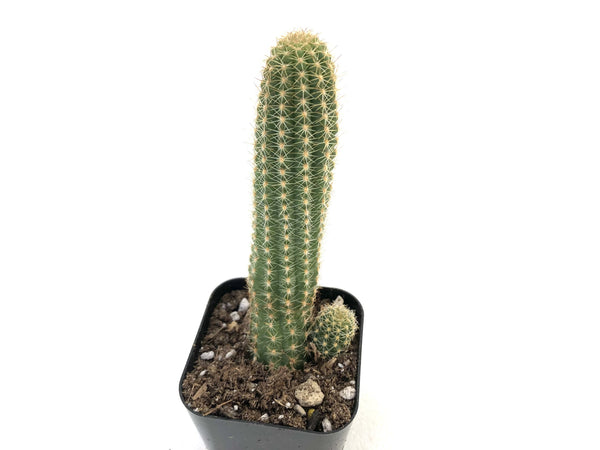
Echinopis huascha
From $4.49
A fast growing clumping species that is initially erect but tends to become prostrate. The spines vary in length and can range from red or brown to golden yellow. They can form a dense mound of long thick cylindrical stems. Produces a lovely red funnel shaped flowers in the summer. Easy to grow.
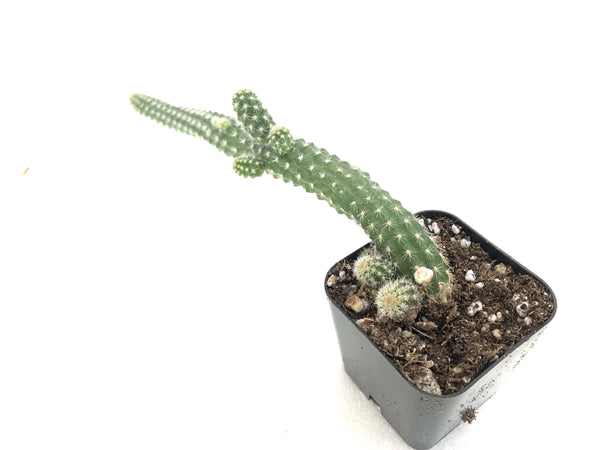
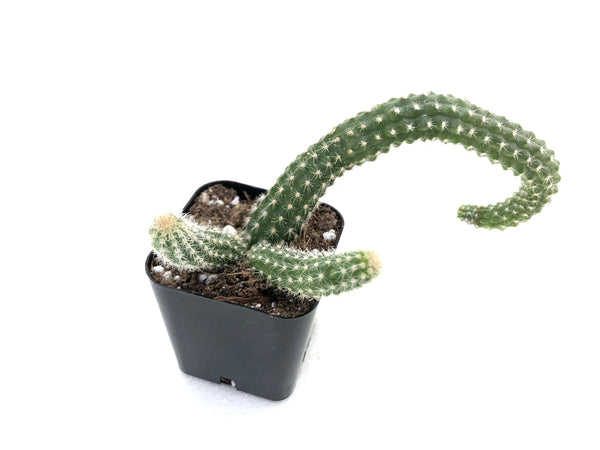
Echinopsis chamaecereus (Peanut Cactus)
From $4.99
This small slender popular, fairly quick growing cactus has very short white spines that branch to form a cluster of creeping pale green candle like stems. Remarkable funnel shaped flowers open in late spring or early summer varying in color from yellow to orange with some a mixture of both colors. An easily grown cactus, its best in wide pots or as a hanging basket.


Echinopsis crassicaulis (Red Velvet)
From $4.49
Echinopsis crassicaulis is a striking and slow-growing cactus species native to northern Argentina, particularly in the Catamarca region. It belongs to the Cactaceae family and is known for its compact form, fierce spines, and vivid flowers. Sometimes referred to as Lobivia 'Red Velvet', highlighting its vivid red summer blooms and fuzzy, glaucous texture. 🌵 Botanical Description: Growth Habit: This species typically forms small, dense clumps over time. It offsets from the base and grows slowly. Stem: Cylindrical and robust, reaching up to 15 cm tall and 10 cm wide, with a very dark green coloration. Spines: Short but strong, with...
Euphorbia bupleurifolia x susanne
From $5.49
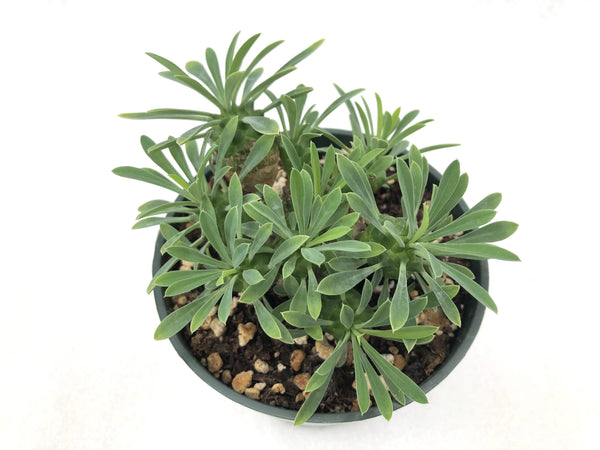
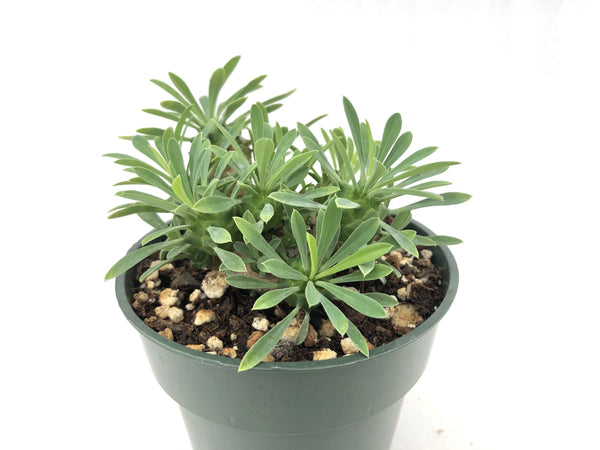
Euphorbia bupleurifolia x susanne hybrid is a swarf plant. The bulbus caudex resembles that of a pineapple. Pups are produced from the main plant making it look like it grows in clusters. This adorable plant likes bright light, is easy to grow and will go great in your collection.
Euphorbia lactea 'Cristata Variegata'
From $10.00
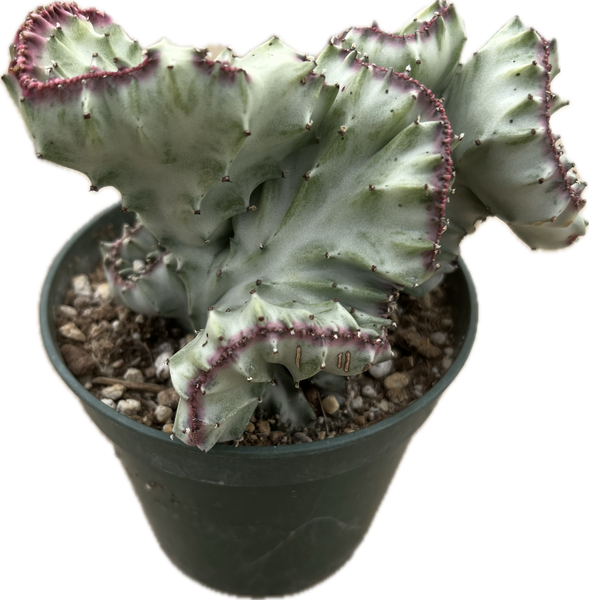
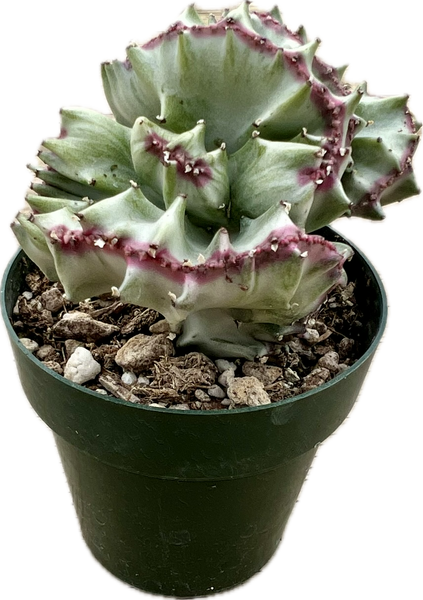
Euhorbia lactea 'Cristata Variegats' (also know as the brain) is a small, slow-growing succulent with a stem composed of a continuous series of fan-shaped branches arranged in an alternating, undulating pattern. The stems range in color from white, yellow, and green to pink and violet. The paired spines are mainly located along the ridge of the crest. Place in a sunny window or put outside in the summer, but protect from the frost and too much rain. This euphorbia makes an interesting conversation piece and a nice addition to any collection. These plants are not on grafted stock.


Euphorbia lactea Cristata (Brain Cactus)
From $10.00
Euphorbia lactea 'Cristata' (also know as the brain) is a small, slow-growing succulent with a stem composed of a continuous series of fan-shaped branches arranged in an alternating, undulating pattern. The green form features intricately undulating fan-shaped branches that form snaky ridge or crowded cluster. The plant's striking dark green color is attractively marked with silver-grey zigzag patterns stems range in colors. The paired spines are mainly located along the ridge of the crest. Place in a sunny window or put outside in the summer, but protect from the frost and too much rain. This euphorbia makes an interesting conversation...
Euphorbia mammillaris f. variegata
From $4.99
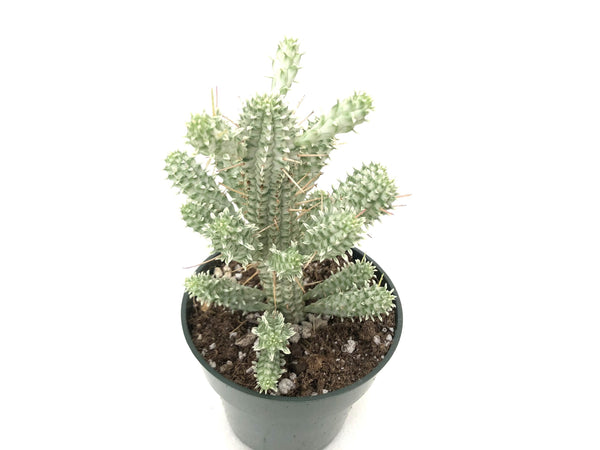
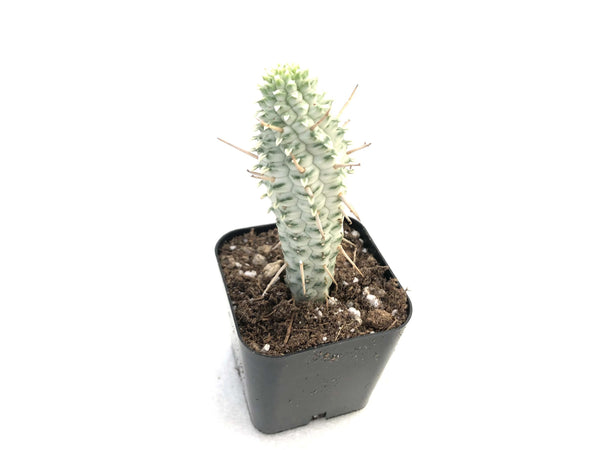
Easily recognized for its stem, which is subtle cream to frosty greenish-white with a splash of darker green. When temperatures are cold, stems become brushed with pink coloring on the tips. The stem grows upright with many club-like, lateral branches. A very easy grower with nice eye appeal coloring.


Euphorbia meloformis (Melon Spurge)
From $8.99
Euphorbia meloformis, the melon spurge, has a rounded shape, ribbed stem, and understated blooms drawing the eye and intriguing the mind. Adapted to thrive in harsh environments, yet easy to cultivate in the home, it offers both practical and aesthetic rewards. Whether grown for its sculptural form or as an emblem of the world’s arid wonders, melon spurge continues to inspire admiration and curiosity wherever it is found. Botanical Description: Euphorbia meloformis earns its common name from the plump, rounded, melon-like appearance of its stem. Typically growing to a height of 10-15 centimeters and a diameter of 10-20 centimeters, the...


Euphorbia Obesa (Baseball Plant)
From $8.50
Euphorbia obesa, commonly known as the Baseball Plant, is a unique and highly sought-after succulent native to South Africa. Its most distinctive feature is its perfectly round, ball-like shape, which closely resembles a baseball—hence the name. The plant is typically grey-green with horizontal stripes or bands that can range from lighter green to reddish or purplish hues, especially when exposed to strong sunlight. Mature specimens usually display eight slightly raised ribs adorned with small bumps, further enhancing its resemblance to a stitched baseball. Size & Growth: Euphorbia obesa is a slow-growing, perennial succulent that remains compact, generally reaching up to...
Euphorbia platyclada Deadwood
From $7.99
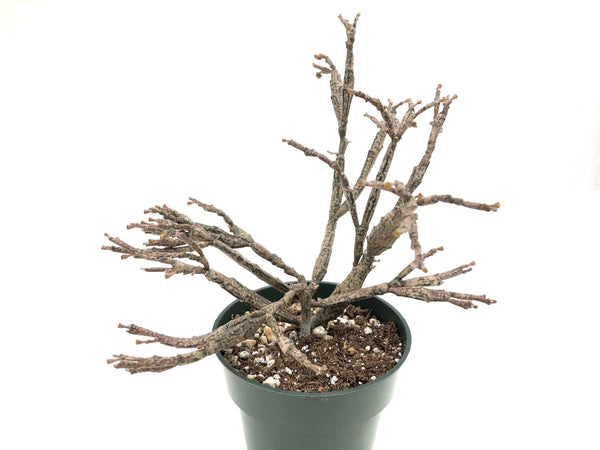
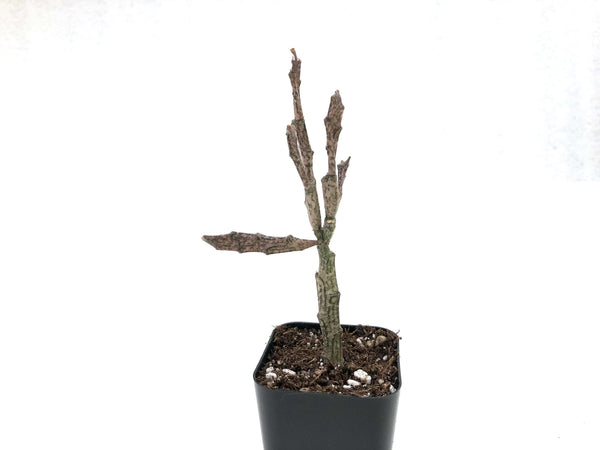
Euphorbia platyclada (Deadwood) is a highly unusual succulent with flattened, speckled, red-brown leafless stems. This wacky plant has a pinky brown color which become brighter in bright sunshine during the summer time. It is slow growing with an irregular growth pattern and branches freely. Branches are highly unique and interesting with 'fingers' on their ends. The plant does look dead hence its common name Euphorbia Deadwood. A great plant for both collectors and beginners. Euphorbia playtclada (Deadwood) is an easy plants to care for and likes bright light. Small yellow flowers appear on the ends of the branches throughout the...


Euphorbia susannae
From $7.99
An intriguing bright green euphorbia to add to your collection. A crazy looking succulent that mounds up to form a pile of bumpy, lime green stem segments. Susannae stays relatively compact reaching about 4" tall and 10" wide. Easy to grow, makes a great potted plant. When Euphorbias are damage they usually leak a whitish sap, known as latex. Latex can cause skin irritations if left on your skin.
Gasteria armstrongii
From $4.99
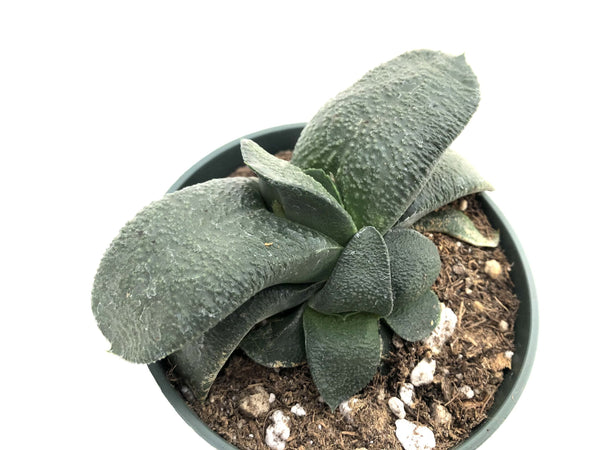
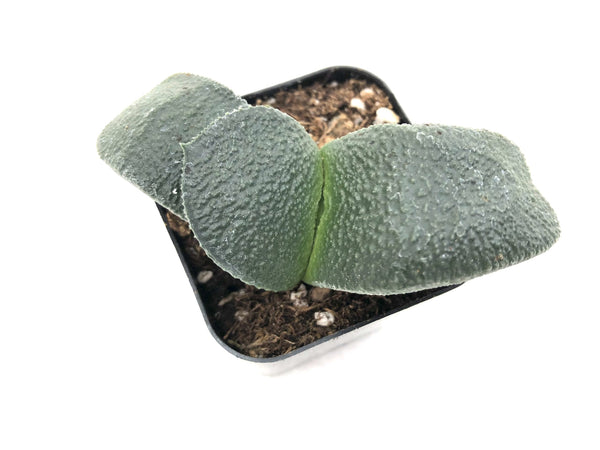
Gasteria armstrongii, also known as Armstrong's Gasteria, is a unique and attractive succulent native to South Africa. This plant is highly prized by succulent enthusiasts for its distinctive appearance and ease of care. Description: Gasteria armstrongii features thick, dark green leaves that are arranged in a rosette pattern. The leaves are smooth, glossy, and often have a slightly rough texture with small, white spots or tubercles. The plant's compact size and slow growth make it an excellent choice for container gardening or as a decorative indoor plant. Light and Growing Conditions: Light: Gasteria armstrongii thrives in bright, indirect light. It...
Gasteria brachphylla var. bayeri
From $4.49
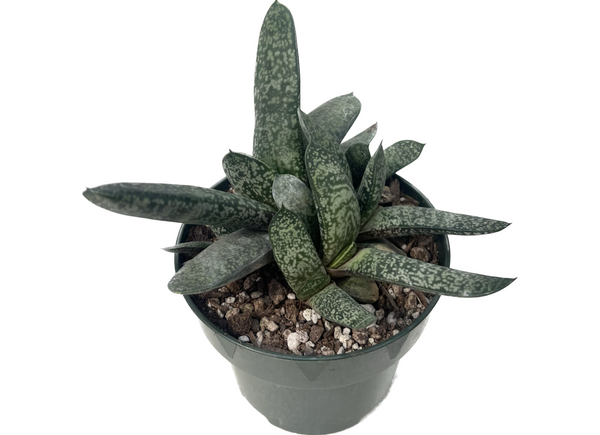
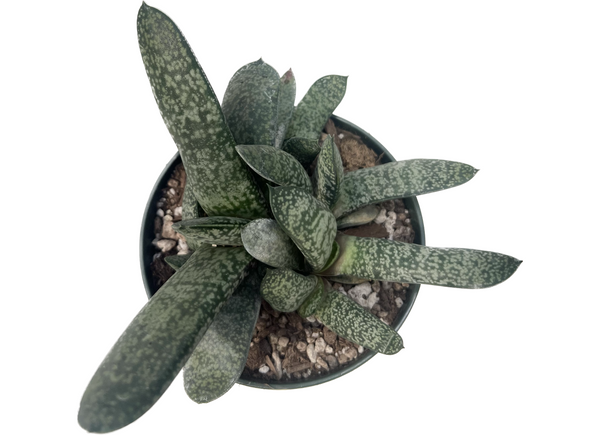
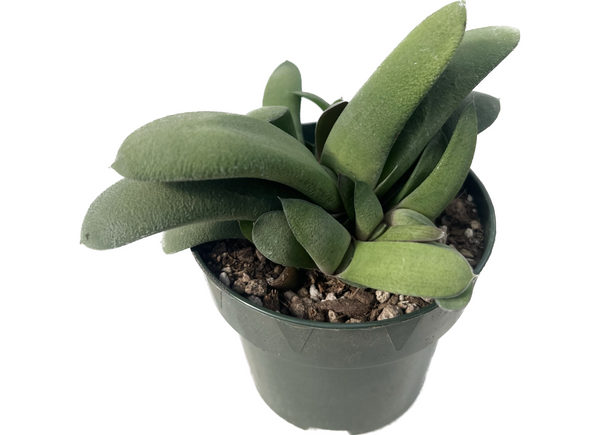
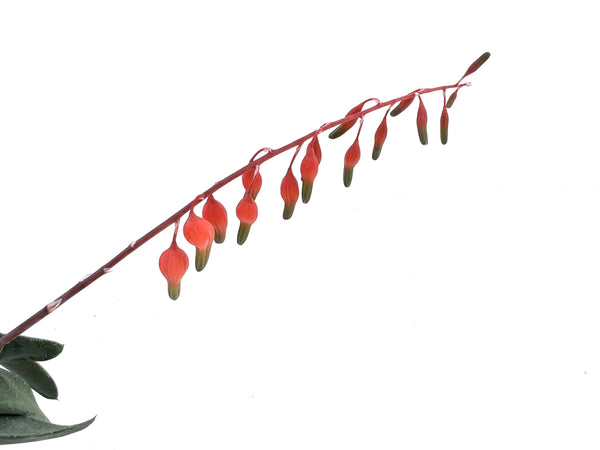
The Gasteria brachyphylla var. bayeriis a distinct variety of the Gasteria brachyphylla. This succulent plant is native to the hills surrounding Badspoort near Calitzdorp and a site near Vanwyksdorp in the Western Cape, South Africa. The Gasteria brachyphylla var. bayeri is a small variant, with leaves that are only 15-50 mm long and have truncated leaf-tips. The leaves are green and have white spots arranged in irregular transverse bands. The inflorescence can grow up to 28 cm long, and the flowers are about 18 mm in diameter, which is quite large for such a small plant. The flowers appear most...
Gasteria glomerata
From $4.49
The Gasteria glomerata, also known as the Kouga Gasteria, is a small, stemless succulent that is native to South Africa. This plant is particularly found in the Kouga Dam area in the Eastern Cape province, where it grows on sheer, vertical, shady, south-facing rocky ledges. The Gasteria glomerata has tongue-shaped, gray-green leaves arranged in two opposite vertical rows. These leaves are slightly rough in texture and often strongly recurved. The plant grows up to 1.6 inches (4 cm) tall and 3.2 inches (8 cm) in diameter, forming a dense cluster up to 8 inches (20 cm) in diameter. The leaves...
Gymnocalycium Baldianum
From $4.99
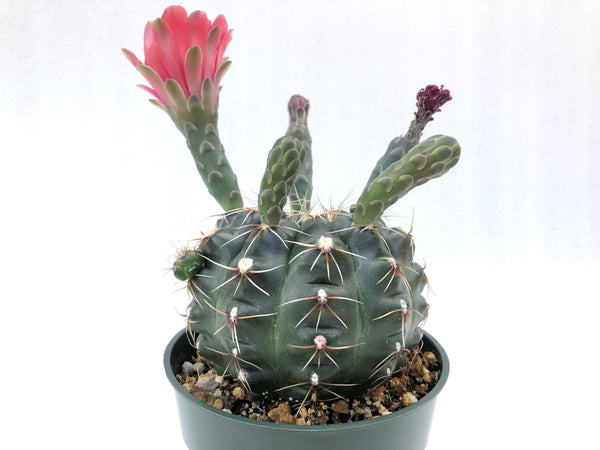
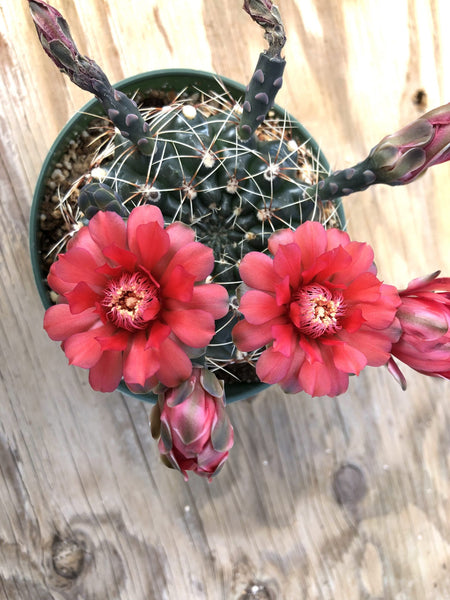
Easily grown, these small and globular cacti start to flower when they are fairly young. The flattened, dark green stem produces beautiful funnel shaped flowers around the crown of the cacti. Flowers can be white, pink, orange, red, or shades in between. They bloom in intervals from late spring right through the summer. Flowers need bright light to open fully.


Gymnocalycium bruchii
From $4.99
Gymnocalycium bruchii is a charming, miniature cactus species native to Argentina, particularly the provinces of Córdoba and San Luis. It is highly valued among collectors for its compact size, prolific clustering, and abundant, showy blooms. Botanical Description: Growth Habit: Forms dense clumps of small, globular to slightly flattened blue-green stems. Each stem is typically 3–6 cm in diameter and up to 4–6 cm tall, though some sources note mature clumps can reach up to 15 cm across. Ribs & Areoles: Stems have 8–12 shallow ribs lined with conical tubercles. Areoles are woolly and white, producing clusters of fine, bristle-like spines....


Gymnocalycium damsii var. multiproliferum
From $4.99
Gymnocalycium damsii var. multiproliferum is a distinctive and highly prolific cactus variety, valued for its neat appearance and ease of propagation. Botanical Description: Growth Habit: This variety is famous for its heavily branched habit, producing numerous offsets—almost one from each areole. These offshoots detach easily and root quickly, forming dense colonies. Stem: Typically olive green to bronze, highly decorative, and grows up to 10 cm tall and 8–10 cm in diameter in cultivation (smaller in habitat). The stems are rounder and less raised than other varieties. Spines: Short, soft, and nearly useless for defense. Flowers: Funnel-shaped, white to pale pink,...


Gymnocalycium fleischerianum
From $4.99
Gymnocalycium fleischerianum is a compact, globular cactus species native to northern Paraguay, often found growing in shallow soils at the margins of rocky outcrops and in cracks among plant debris. Botanical Description: Stem: Flat-globular to globular, sometimes sunken into the soil during dry seasons. The epidermis is dark, glossy green. Mature plants are typically 4–10 cm in diameter, and may become more cylindrical in cultivation. Ribs: Wider and more rounded than similar species, lacking transverse furrows. Spines: Each areole can have up to 9 or more long, thin, slightly curved spines that are close to the body. Growth Habit: Older...
Gymnocalycium horstii
From $4.99
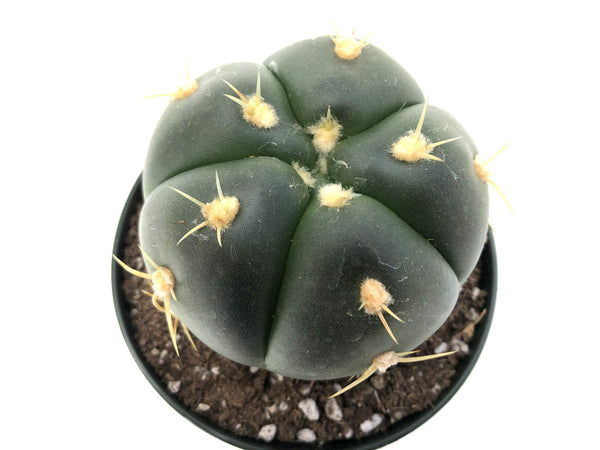
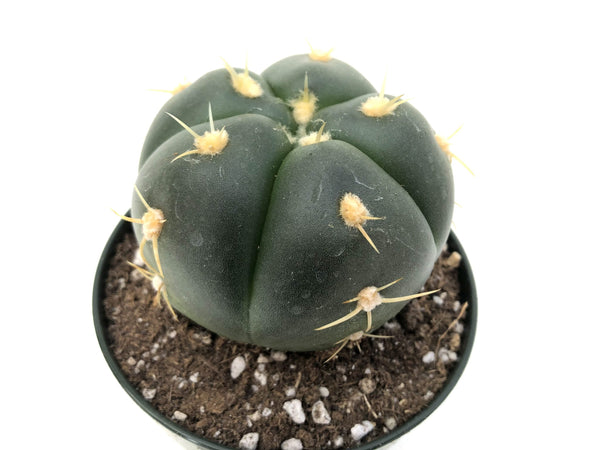
A smooth, shiny, green ball shaped cactus with yellowish whit spines. Spines are straight or slightly curved. Usually a solitaire plant but can slowly offset with age. Flowers are white to pale pink. This is a squatty shaped cactus is easy to grow and has a nice eye appeal.


Gymnocalycium mesopotamicum
From $4.99
Gymnocalycium mesopotamicum is a compact and attractive cactus species native to Argentina, particularly the Corrientes and Mercedes regions. It is prized by collectors for its neat form, prolific offsets, and striking flowers. Botanical Description: Growth Habit: Typically solitary in habitat but freely branching in cultivation, forming pleasing clumps. Mature plants are globular to slightly flattened, with an umbilicate depression at the apex. Size: Usually 1.2–2.5 cm tall and up to 4 cm in diameter in habitat, but can grow larger in cultivation—up to 10–15 cm tall and 20 cm in diameter. Ribs: 7–9 low, rounded ribs with transverse grooves. Areoles:...