

Rebutia Grandiflora var. red
From $4.99
Rebutia grandiflora var. Red is a dark green, clumping globular species. It typically has 25 spiraling, tuberculate ribs with whitish areoles. The spines are whitish in color, while the radial and central spines take on a brownish hue. This cactus produces diurnal red flowers during the summer months. Great for a beginner grower. It thrives in full sun to partial shade and requires moderate watering in summer and dry conditions in winter. The mature height of this cactus is around 4 inches, and it can spread up to 6 inches in width.
Rebutia Grandiflora var. yellow
From $4.99
Rebutia grandiflora var. Yellow is a dark green, clumping globular species. It typically has 25 spiraling, tuberculate ribs with whitish areoles. The spines are whitish in color, while the radial and central spines take on a brownish hue. This cactus produces diurnal yellow flowers during the summer months. Great for a beginner grower. It thrives in full sun to partial shade and requires moderate watering in summer and dry conditions in winter. The mature height of this cactus is around 4 inches, and it can spread up to 6 inches in width.
Rebutia helosia (Aylostera Helosia)
From $7.99
Rebutia helosia is particularly attractive, thanks to its tiny sliver-white pectinate spines and brown areoles. Branches freely from the base and is prone to root rot. A good draining soil is a must with this cactus. It is considered by many to be one of the nicest in the rebutia species. This plant comes from mountainous areas, so it is important for the plant to have a cool winter period. Our flowers are orange but there is also a red variance.
Rebutia krainziana
From $5.49
A clustering globular cactus has a beautiful dark stem color with spiraling ribs and small white areoles. Stems can reach up to 2-1/2" wide an 4" tall when mature. Clumps grow approximately 4" - 6" wide. Rebutai Krainziana is a prolific bloomer and one of the earliest rebutias to bloom in the spring. Flowers form at the base of each stem and our plant has red flowers. There are other color variations of Rebutia Krainziana. Krainziana continues to flower off and on through the warm months. It is beneficial to repot this plant annually until it reaches about 4" wide...
Rebutia Muscula ( Orange Snowball)
From $4.99
A beautiful small cactus covered by dense fury white spines. This cactus will form clumps with age around the base of the main plant. Native to Bolivia, it has delightful orange flowers that emerge from the base. This summer grower is easy to cultivate but is sensitive to over watering.
Rita Lee's Nursery Gift Card
From $25.00
"Give the gift of prickly joy and leafy love! This gift card is perfect for the person who can’t keep a plant alive... unless it’s a cactus. They’re tough, just like your friendship! Whether it’s a succulent that survives on neglect or a cactus that thrives on just a little sunshine, they’ll find something to add some spiky charm to their space. Choose from the following amounts to suit their needs (or your budget!): $25.00: For the casual plant lover who wants to dip their toes in the world of succulents. $50.00: For the person who’s ready to start their...
Senecio rowleyanus String of Pearls
From $4.99
A popular houseplant which is in the daisy family has very slender, trailing stems with round pea like green leaves. This relatively fast growing plant makes it a good choice for hanging baskets so that the trailing stems can hang down to produce a bead curtain. Tiny white flowers appear near the stem tips in autumn
Senecio rowleyanus variegata (String of Pearls)
From $6.99
A uniquely distinctive treasured plant. The variegated pearls hang on thin stems and are mostly green and white/cream. In some growing conditions you can also see a tinge of pink. Growing slower than the traditional pearls they are ore than worth the extra time and effort.
Sulcorebutia albissima
From $4.99
A clustering, low growing variety named for the attractive dense white spines covering its green to grayish body. Freely produces flowers that are a beautiful purple-pink to pale magenta. A very pleasing and relatively quick growing plant.
Sulcorebutia rauschii
From $6.99
Sulcorebutia rauschii, also known as Rebutia rauschii, is a small, clustering cactus native to Bolivia. It forms dense clumps of dark green to purplish stems, each covered in flat, spirally arranged tubercles. The cactus is adorned with short, black spines that lie flat against the surface, giving it a distinctive, textured appearance. During late spring, Sulcorebutia rauschii produces vibrant magenta flowers with a paler throat, which bloom near the base of the stems. These funnel-shaped flowers can reach up to 2 inches (5 cm) in length, adding a striking contrast to its dark body. The plant thrives in well-draining soil,...
Titanopsis calarea
From $4.99
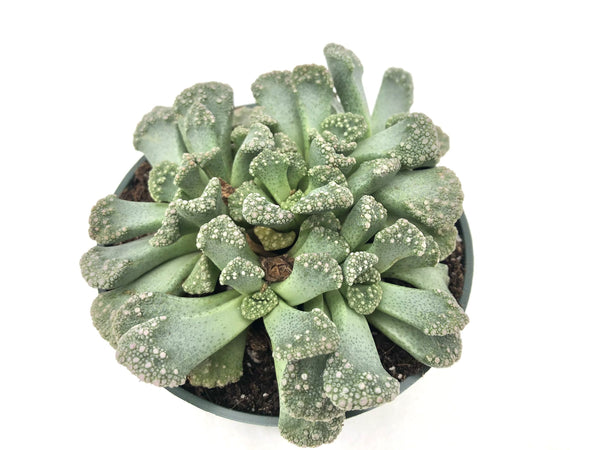
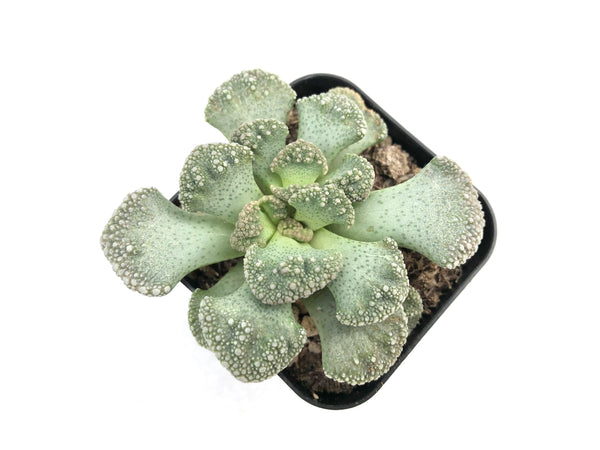
Titanopsis (concrete leaf living stone) are native to South Africa. Low growing succulent rosettes of 5-6 pairs of interesting blue-green leaves that are red ringed with rough tubercles at the apex. This charming little plant flowers with yellow to orange blossoms during their winter growing periods. They become dormant or semi dormant during mid summer. Water well during its growing period of fall and spring allowing compost to dry between watering. They should be kept dry when the temperature is below 45 degrees. Concrete Leaf Living Stone should be kept in bright light.
Trichocereus pachanoi
From $5.49
richocereus pachanoi, commonly known as the San Pedro cactus, is a fast-growing, columnar cactus native to the Andes Mountains of Peru, Ecuador, and Bolivia. It typically grows at elevations between 2,000 and 3,000 meters (6,600–9,800 ft). Description Appearance: The cactus forms upright, bluish-green stems with 6–8 rounded ribs, often branching from the base to create a small tree-like clump. Stems can reach heights of 3–6 meters (10–20 ft), and diameters of 6–15 cm (2.4–5.9 in). The ribs are lined with whitish areoles, each bearing clusters of short, yellow to brown spines, though cultivated specimens are often nearly spineless. Flowers: San...