

Home Euphorbia Obesa (Baseball Plant)


Euphorbia Obesa (Baseball Plant)
$8.50
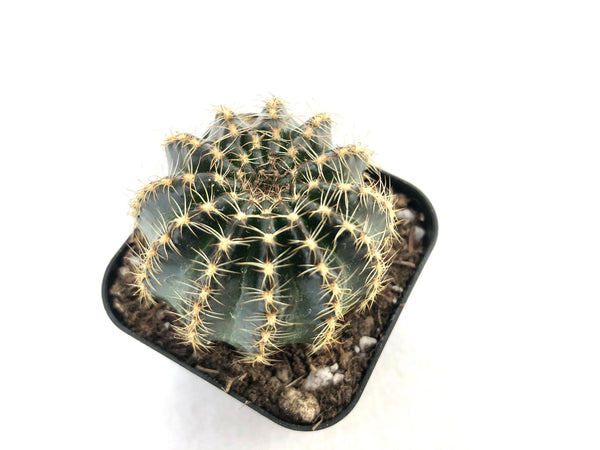
Euphorbia obesa, commonly known as the Baseball Plant, is a unique and highly sought-after succulent native to South Africa. Its most distinctive feature is its perfectly round, ball-like shape, which closely resembles a baseball—hence the name. The plant is typically grey-green with horizontal stripes or bands that can range from lighter green to reddish or purplish hues, especially when exposed to strong sunlight. Mature specimens usually display eight slightly raised ribs adorned with small bumps, further enhancing its resemblance to a stitched baseball.
Size & Growth: Euphorbia obesa is a slow-growing, perennial succulent that remains compact, generally reaching up to 8 inches (20 cm) in height and about 4 inches (10 cm) in diameter. As it ages, the plant may become more cylindrical but retains its iconic spherical form for many years.
Flowers & Reproduction: The Baseball Plant is dioecious, meaning individual plants are either male or female. It produces small, inconspicuous yellowish-green flowers (cyathia) on short stalks at the top of the stem during summer. Female plants develop small, capsule-like fruits that burst open to disperse seeds after pollination.
Care & Cultivation: Euphorbia obesa thrives in bright, indirect sunlight and prefers well-draining soil, such as a cactus or succulent mix. It is extremely drought-tolerant and should be watered only when the soil is completely dry. The plant is not frost-tolerant and should be protected from temperatures below 5°C (41°F).
Toxicity: Like many members of the Euphorbia family, Euphorbia obesa contains a milky latex sap that can irritate skin and eyes and is toxic if ingested. Handle with care and keep away from pets and children.
Plant sizes may vary and you may get a male or female (we do not separate by male and female).







)